Abraham Lincoln stands as one of the most remarkable figures in modern history, a leader whose life journey from obscurity to greatness reshaped the destiny of a nation. Born on February 12, 1809, in a humble log cabin in Kentucky, Lincoln’s early years were marked by poverty, hardship, and limited access to formal education. Yet, through sheer determination and an insatiable appetite for learning, he educated himself, reading extensively on law, history, and literature.
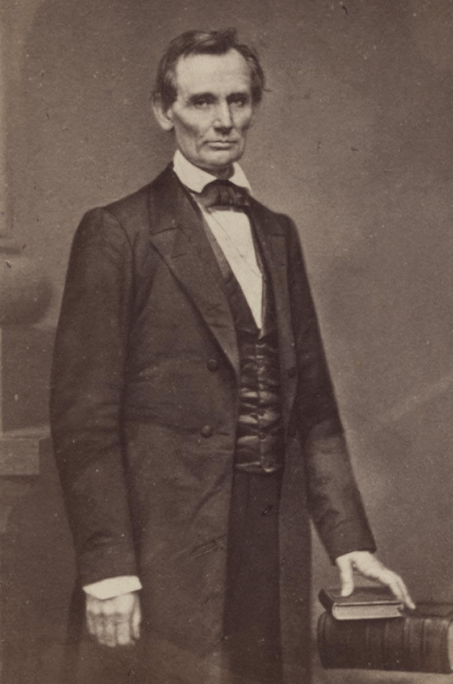
These formative experiences shaped not only his intellectual abilities but also his moral compass, particularly his growing discomfort with the institution of slavery, which he witnessed during his travels to the Southern states. His early life thus laid the foundation for a leader who would later combine empathy with firm conviction in confronting one of the greatest moral crises of his time.
Rise of Political Career
Lincoln’s entry into public life began in Illinois, where he was elected to the state legislature in 1834. As a member of the Whig Party, he advocated economic development, internal improvements, and the expansion of opportunities for ordinary citizens. His career as a lawyer further sharpened his analytical thinking and oratorical skills, earning him a reputation for integrity and clarity of argument.
During this period, Lincoln’s views on slavery evolved gradually while he did not initially call for its immediate abolition, he firmly opposed its expansion into new territories, believing it to be morally wrong and politically dangerous. The turning point in his political career came with the Kansas-Nebraska Act of 1854, which reopened the question of slavery’s expansion and prompted Lincoln to re-enter national politics with renewed purpose.
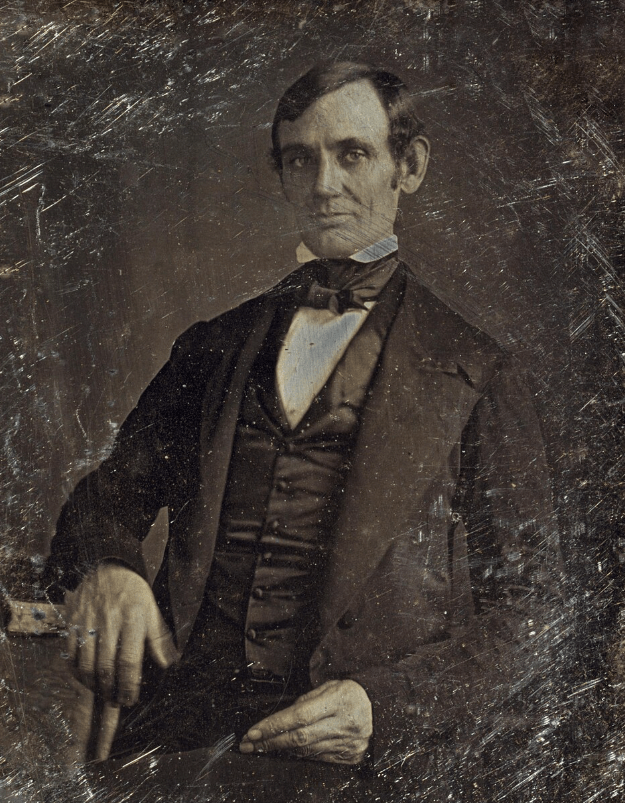
Lincoln’s national prominence grew significantly during the Lincoln-Douglas debates of 1858, where he articulated his famous warning that “a house divided against itself cannot stand.” This statement captured the essence of the crisis facing the United States, as the nation struggled to reconcile its democratic ideals with the existence of slavery.
Although he did not win the Senate seat, the debates elevated him to national recognition, paving the way for his election as the 16th President of the United States in 1860. His victory, however, triggered immediate consequences, as several Southern states seceded from the Union, fearing that his presidency would threaten the institution of slavery. The United States thus plunged into the Civil War in 1861, a conflict that would test Lincoln’s leadership to its fullest extent.
Leadership during American Civil War (1861-1865)
During the Civil War, Lincoln demonstrated extraordinary resilience, political skill, and moral clarity. His primary objective at the outset was the preservation of the Union, as he firmly rejected the legality of secession and upheld the idea of an indivisible nation. At the same time, he faced immense challenges, including military defeats, political opposition, and a deeply divided public opinion.
Through careful management of his cabinet, strategic appointments of capable generals such as Ulysses S. Grant, and constant engagement with the public, Lincoln ensured that the Union remained steadfast in its resolve. As the war progressed, his vision evolved, and he came to recognize that the preservation of the Union could not be separated from the question of slavery.
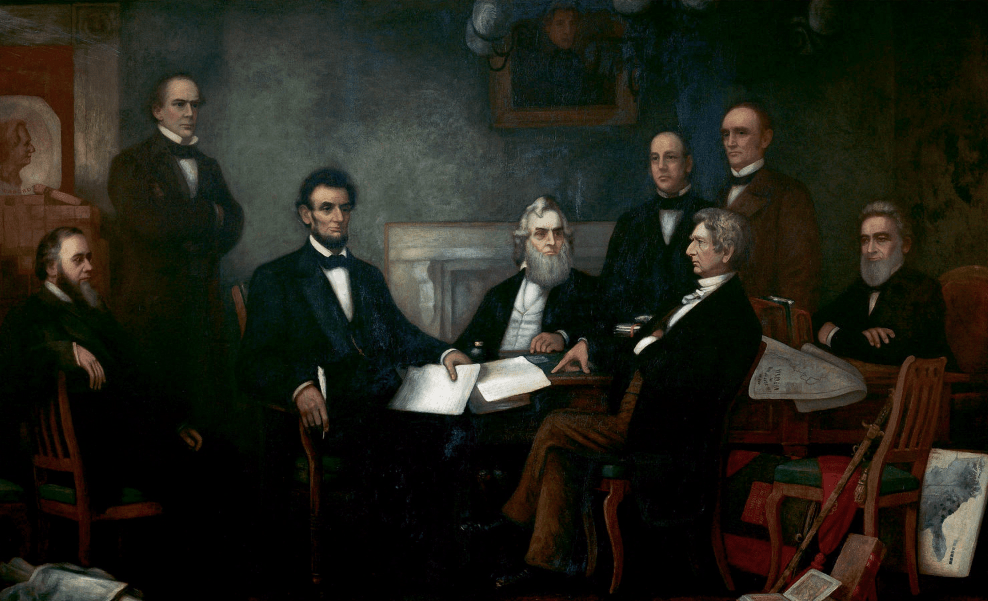
This realization culminated in the Emancipation Proclamation of January 1, 1863, a landmark measure that declared the freedom of slaves in Confederate territories. Although limited in its immediate scope, the proclamation transformed the character of the war, turning it into a moral struggle against slavery and aligning the Union cause with the principles of human freedom and equality.
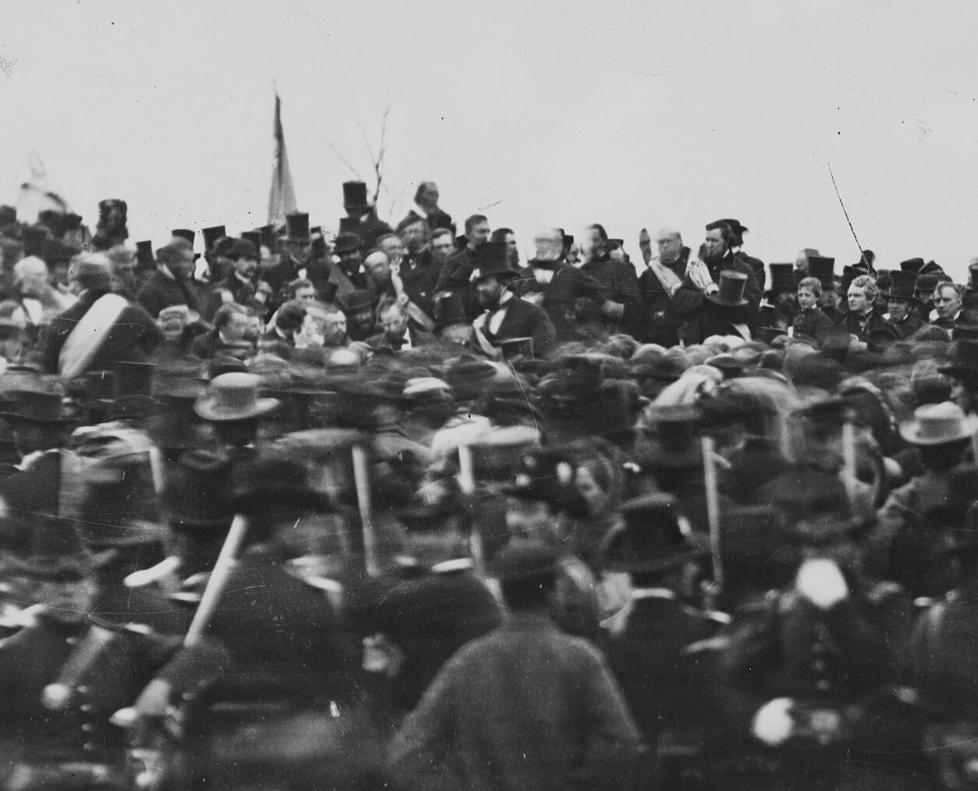
It also allowed African Americans to join the Union Army, thereby strengthening its military capacity. Lincoln further reinforced this moral vision through his Gettysburg Address (19th November 1863), in which he redefined the American nation as one dedicated to the ideals of liberty and democratic governance, famously asserting that a government “of the people, by the people, for the people” must endure.
Vision for Post War Reconstruction
As the war neared its end, Lincoln turned his attention to the future of the nation, articulating a vision of reconstruction grounded in reconciliation and unity. He advocated a lenient approach toward the Southern states, emphasizing the need to heal rather than punish. His Ten Percent Plan sought to facilitate the rapid reintegration of the South into the Union, reflecting his belief that lasting peace could only be achieved through compassion and cooperation.
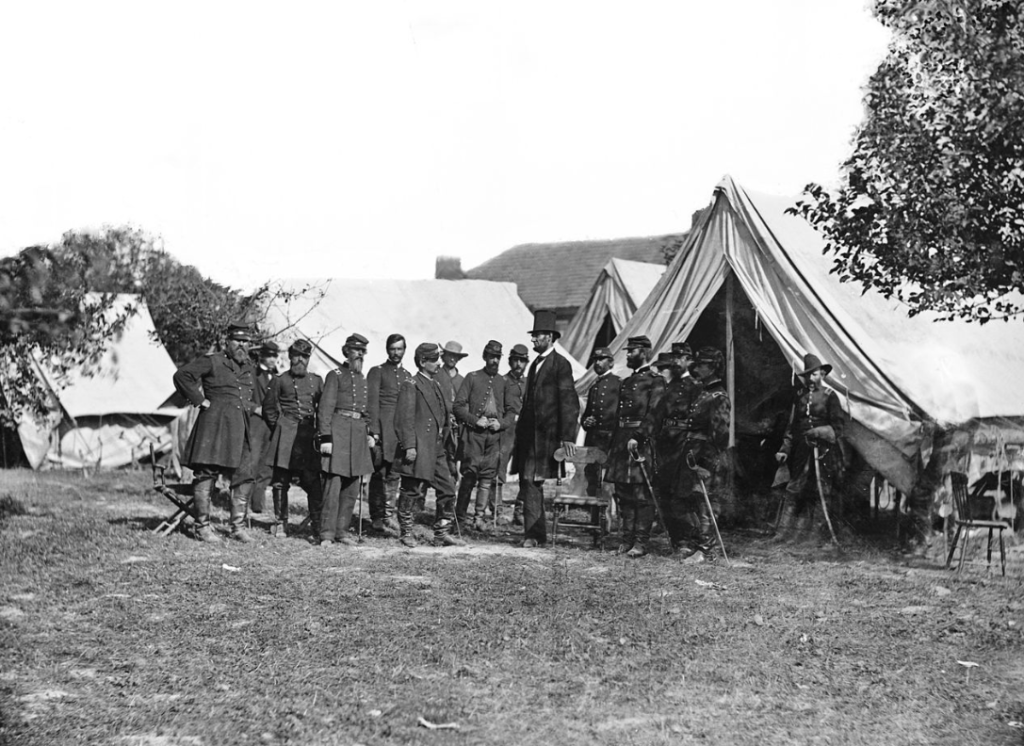
In his Second Inaugural Address in 1865, Lincoln expressed this vision with profound eloquence, calling for a nation guided by “malice toward none, with charity for all.” At the same time, he played a crucial role in ensuring the passage of the Thirteenth Amendment, which abolished slavery permanently across the United States, thereby securing one of the most significant achievements of his presidency.
Assassination & End of the Dream
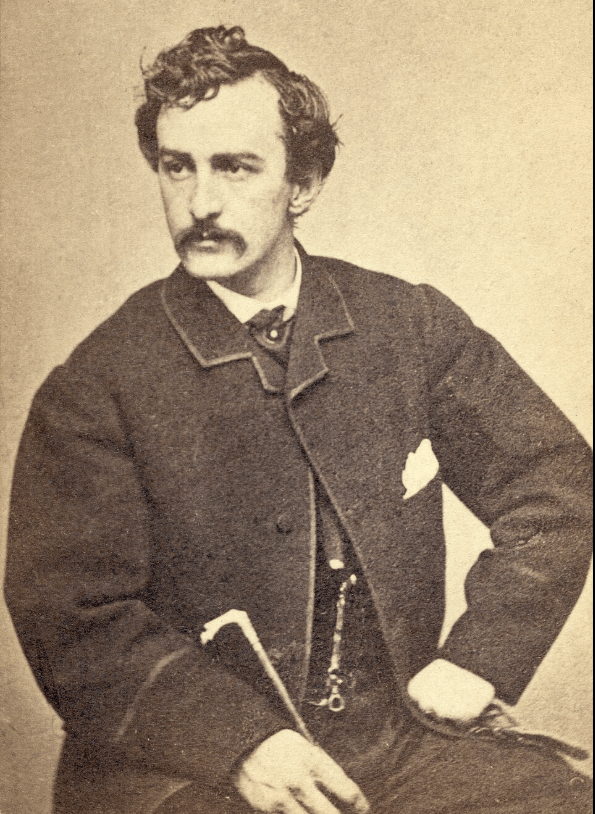
The assassination of Abraham Lincoln on April 14, 1865, was not an isolated act of violence but the culmination of deep political hatred and ideological conflict that had intensified during the Civil War. John Wilkes Booth, a well-known actor and a staunch Confederate sympathizer, viewed Lincoln as a tyrant who had destroyed the Southern way of life and undermined states’ rights. Booth was deeply opposed to Lincoln’s policies, particularly the abolition of slavery and the extension of political rights to African Americans, which Lincoln had begun to hint at in his final speeches.
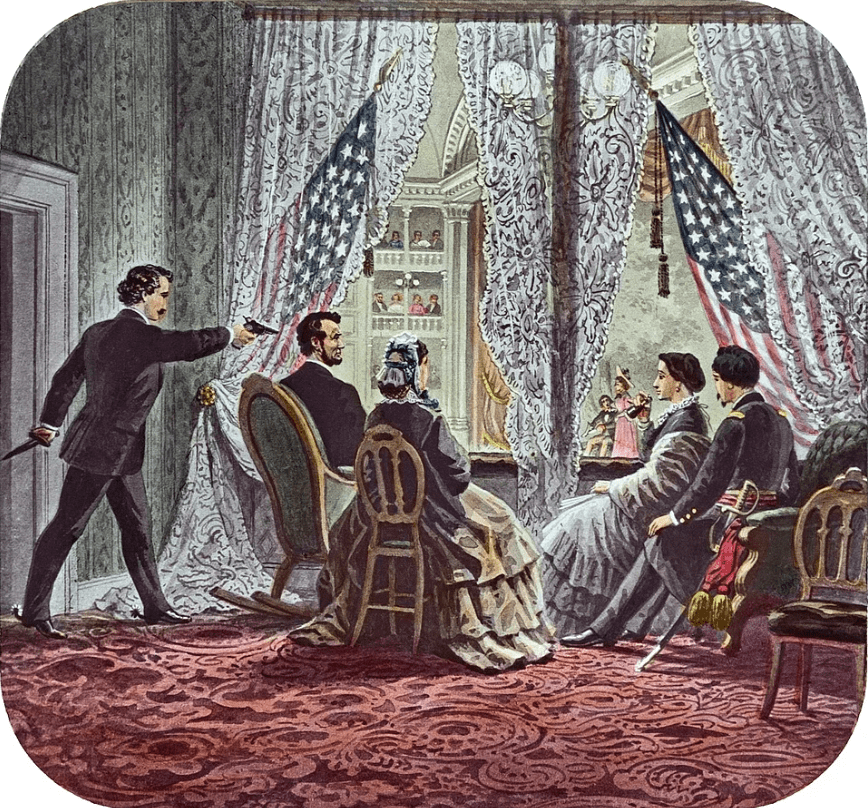
Initially, Booth had conspired to kidnap Lincoln in order to bargain for the release of Confederate prisoners, but as the Confederacy collapsed and Lee surrendered at Appomattox (on 9th April 1865), his plan escalated into assassination. On the night of April 14, 1865, at Ford’s Theatre in Washington, D.C., Booth shot Lincoln at close range, believing that by eliminating the President and key members of his administration, he could revive the Southern cause and throw the Union government into chaos.
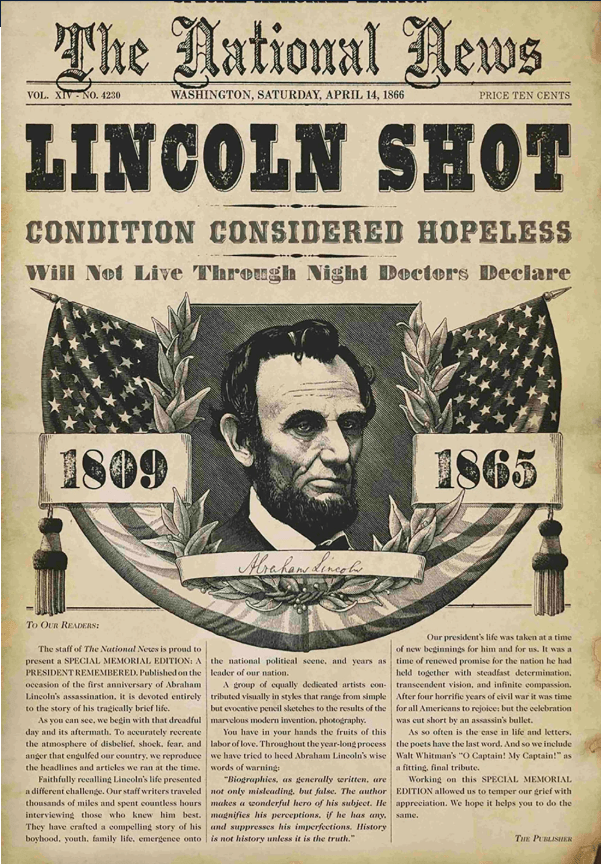
The impact of Lincoln’s assassination was immediate and profound, both politically and emotionally. His death transformed him into a martyr for the Union and the cause of freedom, uniting the North in grief and reinforcing his legacy as the savior of the nation. However, it also had far-reaching consequences for the future of the United States. Lincoln’s vision of a lenient and reconciliatory Reconstruction died with him, and in his absence, the process of rebuilding the nation became more contentious and punitive under his successors.
The delicate balance he had sought to maintain between justice and reconciliation was disrupted, leading to increased tensions between the North and the South. Moreover, the hopes of a more inclusive and equitable society for freed African Americans were only partially realized, as resistance in the South grew stronger in the following years. Thus, Lincoln’s assassination not only marked the tragic end of a great leader but also altered the trajectory of American history at a critical juncture, leaving behind a legacy that was as complex as it was transformative.
Conclusion
Abraham Lincoln’s legacy endures as a powerful testament to the ideals of democracy, unity, and human dignity. He not only preserved the United States during its most perilous moment but also transformed it into a nation more closely aligned with its founding principles. His leadership during the Civil War demonstrated that moral conviction and political pragmatism need not be opposed, but can instead work together to achieve lasting change.
For students of history and aspirants of public service, Lincoln’s life offers enduring lessons on the nature of leadership, the importance of ethical clarity, and the capacity of individuals to shape the course of history. In remembering Abraham Lincoln, one is reminded that true greatness lies not in the accumulation of power, but in the courage to use it for the greater good of humanity.
 Sainil Nagare
Leave a comment